GreenPan Reserve Ceramic Nonstick 10-Piece Cookware Set Reviews

Affiliate disclosure: Some links on this page are affiliate links. If you buy through them we earn a small commission at no extra cost to you. Recommendations are research-driven; we don't claim personal use of every product reviewed. Product prices and availability are accurate as of the date published and are subject to change. Always check Amazon for current pricing before purchasing. Learn more.
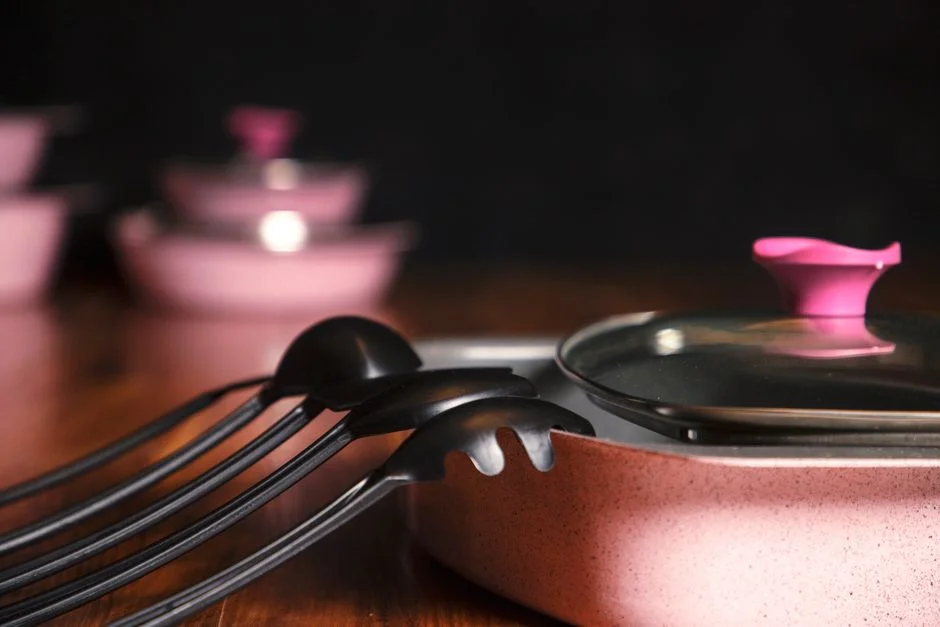
PFAS-free ceramic nonstick coating aligns with health-conscious consumer preferences
See GreenPan Nonstick Reserve Pro 10 Piec… on AmazonCeramic nonstick cookware has come a long way from the early-generation coatings that chipped at the first sign of a metal spoon. GreenPan sits near the center of that evolution, a brand that built its identity around PFAS-free ceramic nonstick technology and hard anodized construction. If you’ve been researching a ten-piece set in the premium nonstick category, chances are GreenPan’s Reserve line has surfaced more than once.
This review covers three GreenPan ten-piece sets, the Reserve Pro, the Hard Anodized Healthy Ceramic, and the Chatham, drawing from manufacturer specs, NSF certification documentation, and the collective experience of long-term owners.
Overview & Key Specs
GreenPan’s ten-piece ceramic nonstick sets share a common construction philosophy: hard anodized aluminum body, Thermolon ceramic nonstick coating (PFAS-free, PFOA-free), and stainless or stainless-accented handles. The three sets reviewed here represent different tiers and style points within that framework, NSF certification on the Reserve Pro being the most notable differentiator.
| Spec | Reserve Pro 10-Piece | Hard Anodized 10-Piece | Chatham 10-Piece | |, |, , , , |, , , , -|, , , | | Coating | Thermolon ceramic nonstick | Thermolon ceramic nonstick | Thermolon ceramic nonstick | | Base construction | Hard anodized aluminum | Hard anodized aluminum | Hard anodized aluminum | | PFAS/PFOA status | PFAS-free, PFOA-free | PFAS-free, PFOA-free | PFAS-free, PFOA-free | | NSF Certified | Yes | Not listed | Not listed | | Induction compatible | Check product page | Check product page | Check product page | | Oven-safe temp | Check product page | Check product page | Check product page | | Handle material | Stainless steel | Gold-tone stainless steel | Stainless steel | | Dishwasher safe | Check product page | Check product page | Check product page | | Price tier | Mid-range | Mid-range | Mid-range |
What Stands Out
The PFAS-free coating is the genuine headline. Thermolon is GreenPan’s proprietary ceramic nonstick coating, and it is manufactured without PFAS, PFOA, lead, or cadmium, per GreenPan’s published product specifications. Owner communities on r/cookware have discussed the Thermolon coating at length, and the consensus is that it performs as advertised for low-to-medium heat applications: eggs release cleanly, sauces don’t stick early in the coating’s life, and there’s no off-gassing concern that accompanies PTFE at high heat. For cooks who have been watching the PFAS conversation unfold and want to move away from traditional nonstick without switching to stainless or carbon steel, this coating is a legitimate alternative, not just marketing repositioning.
Hard anodized construction puts these sets a level above basic aluminum nonstick. The anodization process creates a surface harder than steel and more corrosion-resistant than standard aluminum. Spec sheets confirm the hard anodized body across all three sets reviewed here, and owner reports consistently note that the pan bodies hold up well to regular stovetop use, warping complaints are infrequent in long-term owner threads, which is not something that can be said of all mid-range nonstick sets. Even heat distribution across the base is a regularly cited strength, with owners noting that hot spots are less of an issue than with thin stainless sets at a comparable price point.
The Reserve Pro’s NSF certification carries real weight. NSF International’s certification process is third-party and documented, it’s not a brand self-designation. The GreenPan Nonstick Reserve Pro 10 Piece Cookware Set is the only set in this review that carries NSF certification, meaning it has been independently verified to meet food safety and performance standards. For cooks who want documentation behind health claims rather than brand marketing language alone, this is a meaningful differentiator.
Ten-piece coverage addresses most home cooking scenarios. A ten-piece ceramic nonstick set typically includes multiple skillet sizes, a saucepan, a sauté pan, and a stockpot, enough coverage to handle a full weeknight dinner without reaching for an uncoated pan. Owner reports across all three GreenPan lines reviewed here generally confirm the piece selection is practical rather than padded with redundant items.
Where It Falls Short
Ceramic nonstick has a shorter performance window than PTFE. This is a category-level limitation, not a GreenPan-specific failure, but it matters for buyer expectations. Owner threads on r/cookware consistently note that Thermolon coatings begin to lose their release properties after one to two years of regular use, particularly if the pans are exposed to high heat or abrasive cleaning. PTFE coatings, despite their chemistry concerns, typically outlast ceramic nonstick in practical use. Buyers who prioritize coating longevity over PFAS-free materials should factor this trade-off in clearly.
High-heat cooking is genuinely off-limits. Ceramic coatings degrade faster under high heat than PTFE, and GreenPan’s own care instructions flag this. Owner reports reinforce it: pans used for high-heat searing or preheated empty show accelerated coating breakdown. This means searing proteins properly, the kind of high-heat work that demands a carbon steel or bare cast iron pan, is not what these sets are designed for. Cooks who want one pan to do everything will find that limitation frustrating.
The care requirements add friction. Hand washing is recommended across all three sets, and metal utensils void the coating’s performance guarantees. Owner forums note that the coating is more sensitive to utensil scratches than PTFE, and dishwasher exposure, even in sets marketed as dishwasher safe, shortens coating life based on long-term owner reports. If you’re looking for truly low-maintenance cookware, the full premium nonstick category offers options with more forgiving care profiles.
Who It’s For
These sets are the right choice for cooks who have made a deliberate decision to move away from PFAS-containing nonstick and want a complete kitchen setup without the learning curve of stainless or carbon steel. The hard anodized construction and ceramic coating combination handles eggs, fish, pancakes, and sauces well, the everyday low-to-medium heat tasks that nonstick exists to simplify. The Reserve Pro’s NSF certification adds a layer of third-party verification that health-conscious buyers will find reassuring.
This is not the right choice for cooks who sear frequently, cook at high heat regularly, or want a set that requires minimal care. The ceramic coating demands attention, hand washing, silicone or wooden utensils, no dry preheating, and buyers who aren’t prepared to follow those guidelines will be disappointed with coating longevity within the first year.
Budget-conscious buyers should also consider whether a mid-range ceramic nonstick set aligns with their cooking habits. If you cook nonstick tasks only occasionally and treat the rest of your cooking as a stainless or cast iron task, a single nonstick skillet may serve better than a full ten-piece set investment.
Alternatives to Consider
For cooks considering these GreenPan sets, two alternatives are worth naming plainly.
Caraway produces ceramic nonstick cookware at a comparable price tier with a strong owner and editorial consensus around coating quality. The Caraway set is a smaller piece count but covers core tasks well, and the brand’s coating longevity data from long-term owners is slightly more favorable in community threads than GreenPan’s Thermolon. If the piece count is flexible, Caraway cookware is a direct competitor worth pricing out.
All-Clad stainless is worth naming for cooks on the edge of the ceramic-nonstick category. If the primary driver is durability and long-term performance rather than nonstick convenience specifically, All-Clad’s stainless sets outlast any ceramic nonstick coating by years and don’t require the same care protocols. The learning curve is real, but the lifetime is not comparable.
Frequently Asked Questions
How long does the Thermolon ceramic nonstick coating typically last?
Owner reports and community consensus on r/cookware suggest one to two years of good release performance under regular use, with degradation accelerating under high heat or dishwasher exposure. Following the care guidelines, hand washing, low-to-medium heat, non-metal utensils, extends that window meaningfully. PTFE coatings typically outlast ceramic in longevity comparisons, so buyers prioritizing coating life above PFAS-free status should weigh that trade-off.
Is the GreenPan Reserve Pro set actually safer than traditional nonstick?
GreenPan’s Thermolon coating is manufactured without PFAS, PFOA, lead, or cadmium, per the brand’s published specifications, and the GreenPan Nonstick Reserve Pro 10 Piece Cookware Set carries NSF certification as third-party verification. The coating does not release the compounds associated with PTFE when overheated. What the spec data and owner reports support is that the coating avoids specific chemistry concerns, not that it is a medical-grade health product.
What is the difference between the Reserve Pro, the Hard Anodized Healthy Ceramic, and the Chatham sets?
The primary documented differentiator is NSF certification on the Reserve Pro, which the GreenPan Hard Anodized Healthy Ceramic Nonstick 10 Piece and GreenPan Chatham 10 Piece do not carry. The sets share the same core construction, hard anodized aluminum, Thermolon coating, with differences in handle styling and included piece configurations. Owner consensus does not point to a meaningful performance gap between the three in regular home cooking use.
Can these pans be used on induction cooktops?
Induction compatibility requires a magnetic base, and hard anodized aluminum is not inherently magnetic. Check the specific product page for each set before purchasing, induction compatibility varies by GreenPan line and is not guaranteed across the board. Owner threads flag this as a common point of confusion for buyers upgrading to induction ranges.
When should I choose Caraway over a GreenPan ten-piece set?
Caraway is worth considering when piece count flexibility exists and coating longevity is a priority. Long-term owner reports and community consensus point to Caraway’s coating holding up slightly better under regular use than GreenPan’s Thermolon in direct comparisons. If a smaller, curated set covers your cooking needs, Caraway represents a strong alternative in the same mid-range price tier.
Buying Guide
Understanding Ceramic Nonstick Coating Chemistry
Ceramic nonstick coatings like GreenPan’s Thermolon are sol-gel derived, a silica-based matrix applied and cured at high temperature. The key distinction from PTFE (polytetrafluoroethylene) coatings is the absence of fluoropolymers. Per manufacturer specifications and independent materials documentation, Thermolon does not contain PFAS, PFOA, lead, or cadmium.
What this means practically: the coating won’t release fluoropolymer compounds if accidentally overheated past the manufacturer’s temperature limit.
Hard Anodized vs. Standard Aluminum Construction
Hard anodization is an electrochemical process that thickens and hardens the natural oxide layer on aluminum. The result is a surface approximately 30% harder than stainless steel, per materials data, more scratch-resistant and more corrosion-resistant than standard aluminum cookware.
For practical cooking purposes, r/cookware owners report that hard anodized pans heat more evenly than thin stainless at comparable price points and warp less than budget aluminum sets. The hard anodized base also resists surface damage from stovetop contact.
NSF Certification: What It Actually Means
NSF International is an independent, accredited certification organization. NSF certification on a cookware set means the product has been tested and verified to meet food safety and construction standards, it is not a brand self-designation or a marketing label. The GreenPan Nonstick Reserve Pro 10 Piece Cookware Set carries this certification; the other two sets reviewed here do not.
For buyers who want third-party documentation behind safety claims rather than brand marketing alone, the NSF mark on the Reserve Pro is meaningful.
Maintenance Requirements and Realistic Lifespan
Ceramic nonstick requires more deliberate care than PTFE. Hand washing with a soft sponge preserves coating integrity significantly longer than dishwasher cycles, this is consistent across manufacturer instructions and owner reports for all three GreenPan sets reviewed here. Metal utensils accelerate surface degradation; silicone, wood, or nylon are the practical choices.
Heat management matters more with ceramic than PTFE.
Matching a Ten-Piece Set to Your Actual Cooking Habits
A ten-piece set makes sense when most of your cooking runs through nonstick tasks: eggs, fish, pancakes, delicate sauces, sautéed vegetables. If that covers the majority of your stovetop work, a full set eliminates the need for uncoated pans at all for daily cooking.
If your cooking splits between nonstick tasks and high-heat work like searing, braising, or pan roasting, a ten-piece all-ceramic set may leave gaps. Owner consensus points to a mixed-material kitchen, a two-piece ceramic nonstick set for low-heat work alongside a carbon steel or stainless skillet for high heat, as a more practical configuration than an all-ceramic ten-piece for heavy home cooks.
Three sets reviewed:
GreenPan Nonstick Reserve Pro 10 Piece Cookware Set
The GreenPan Nonstick Reserve Pro 10 Piece Cookware Set is the tier leader among the three sets here, distinguished primarily by its NSF certification. Construction spec is consistent with the GreenPan line: hard anodized aluminum body, Thermolon PFAS-free ceramic nonstick coating, stainless steel handles. The NSF mark provides third-party verification that the set meets independent food safety standards, a meaningful differentiator for buyers who want documentation behind health-oriented marketing claims.
Owner reports for the Reserve Pro follow the pattern consistent across GreenPan’s ceramic nonstick line: strong initial release performance, solid heat distribution, and a coating that rewards careful maintenance.
GreenPan Hard Anodized Healthy Ceramic Nonstick 10 Piece
The GreenPan Hard Anodized Healthy Ceramic Nonstick 10 Piece Cookware Set shares the core construction of the Reserve Pro, hard anodized aluminum, Thermolon coating, PFAS-free chemistry, with gold-tone stainless steel handles as its visual differentiator. It does not carry NSF certification. For buyers for whom the certification is not a decision factor, this set represents essentially the same functional platform at a potentially different price point.
Owner reports do not distinguish meaningfully between this set’s performance and the Reserve Pro’s in regular home cooking tasks.
GreenPan Chatham Hard Anodized Healthy Ceramic 10 Piece
The GreenPan Chatham Hard Anodized Healthy Ceramic 10 Piece Set is the longest-tenured set in this review, with a broader owner review base accumulated over more time on the market than the Reserve Pro. Construction spec follows the same pattern: hard anodized aluminum body, Thermolon ceramic nonstick, PFAS-free manufacturing. No NSF certification.
Long-term owner threads on the Chatham line are instructive precisely because of the time depth.
GreenPan Nonstick Reserve Pro 10 Piece Cookware Set, NSF Certified Ceramic, Hard Anodized PFAS-Free Pots & Pans Set: Pros & Cons
- PFAS-free ceramic nonstick coating aligns with health-conscious consumer preferences
- Hard anodized construction provides durability typical of premium cookware sets
- Premium nonstick cookware sets typically command higher price points than traditional alternatives
Where to Buy
GreenPan Nonstick Reserve Pro 10 Piece Cookware Set, NSF Certified Ceramic, Hard Anodized PFAS-Free Pots & Pans SetSee GreenPan Nonstick Reserve Pro 10 Piec… on Amazon